


Explore how Plymouth City Council is cutting carbon emissions in a Grade II listed historic building.
Name of project
3 Elliot Terrace low carbon heating retrofit
Project by
Plymouth City Council
Partners
Buro Happold SunPeople (EU-funded Interreg project)
Date
4 June 2026
Status
Completed
Project
Description
How do you move away from fossil fuels in a Grade II* listed building in a conservation area? Plymouth City Council is showing that even the city’s most complex and historic buildings can play a part in reducing pollution and cutting carbon emissions.
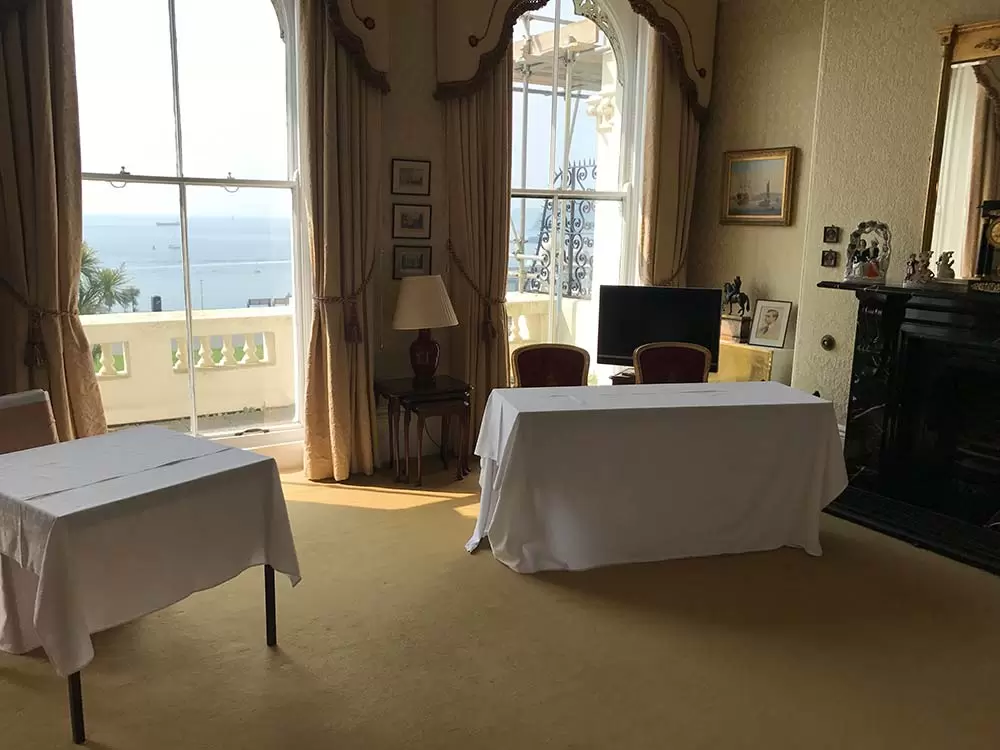
3 Elliot Terrace is one of Plymouth’s most recognisable historic buildings. Built in the mid nineteenth century and later gifted to the city by Lady Nancy Astor, it overlooks the landmark Plymouth Hoe and has a long history of public use. Today, the council-owned building continues to play an important role in civic life, hosting visiting dignitaries, community events and a wide range of functions.

Like many historic buildings, 3 Elliot Terrace was designed long before energy efficiency was a consideration. Traditional construction methods, large single-glazed windows and limited insulation meant the building relied heavily on gas for heating. Rather than seeing this as a barrier, the council identified the site as an opportunity to explore how low carbon heating could be introduced in a way that respected the building’s heritage and character.
This project demonstrates that, with the right approach, it’s possible to significantly reduce reliance on fossil fuels, improve energy efficiency and cut carbon emissions, even in buildings that are traditionally seen as ‘hard to treat’.
Key objectives
The project set out to:
- Reduce carbon emissions from heating
- Move away from fossil fuel use where possible
- Improve comfort and energy efficiency without altering the building’s historic character
- Test solutions that could be applied to other complex or listed buildings across the city
- Support Plymouth’s wider net zero ambitions
The challenge
Historic and listed buildings present unique challenges when it comes to reducing carbon emissions. At 3 Elliot Terrace, many of the most common retrofit measures were either restricted by heritage considerations or limited by the physical constraints of the building itself.
Replacing the original sash windows with modern glazing was not considered appropriate due to the building’s listed status. Instead, a heritage-led approach was taken. Rotten and deteriorating window frames were repaired by specialist contractors, and all windows were carefully draught proofed to reduce heat loss while preserving their historic appearance.

Solar panels were also explored during the feasibility stage. While the building’s listed status was a consideration, the main limitation was practical. The steep roof, surrounding chimneys and limited available space meant there was no suitable area for solar panels to be installed effectively.
Rather than seeing these constraints as barriers, Plymouth City Council treated them as an opportunity to learn, innovate and demonstrate what is possible when climate ambition and heritage protection work hand in hand.

The solution
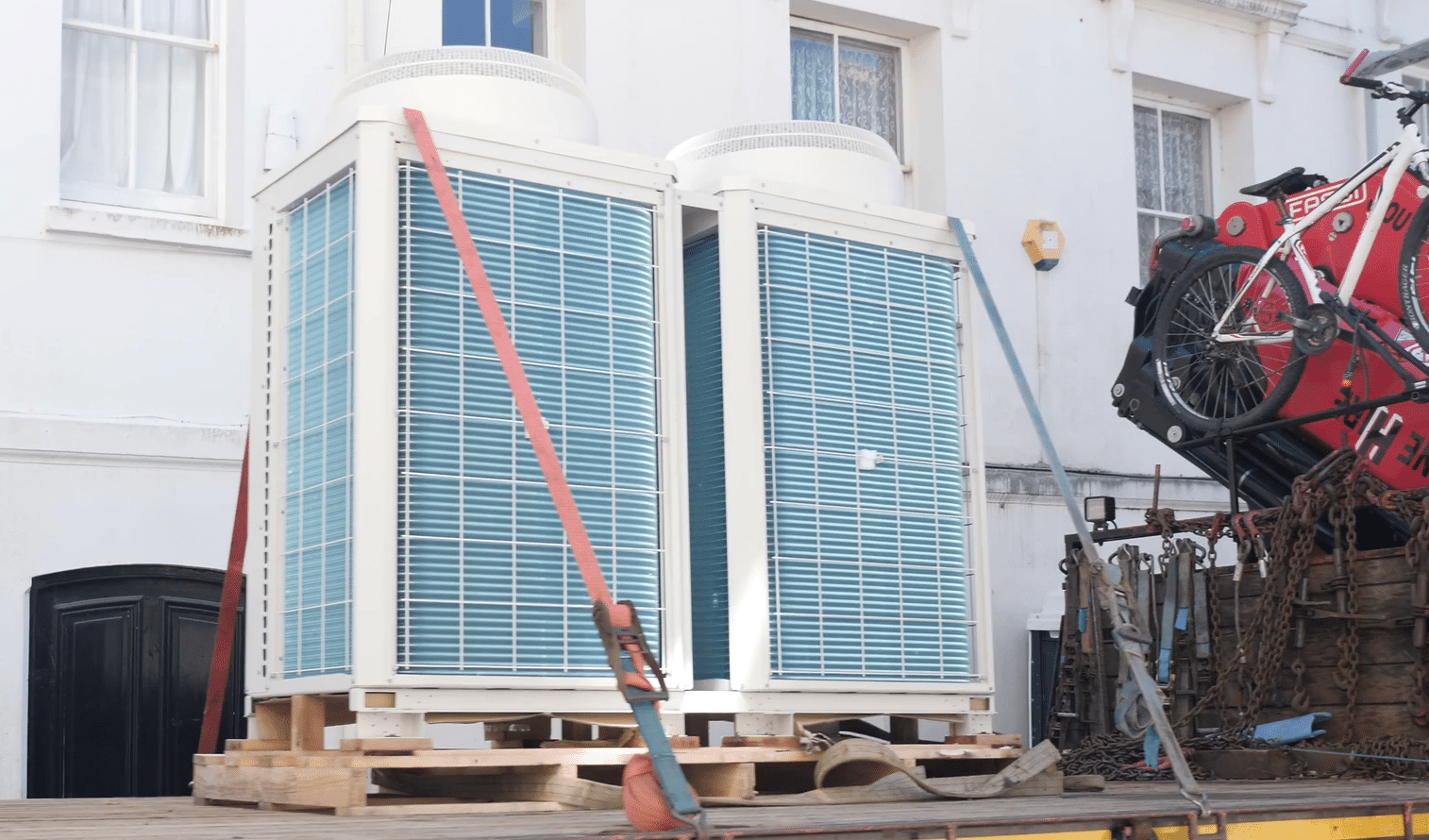
Following a detailed feasibility study carried out through the EU-funded SunPeople programme and Buro Happold, the council installed a large air source heat pump to work alongside targeted improvements to the building fabric.
Air source heat pumps are often assumed to be unsuitable for historical buildings. Careful design and planning showed this wasn’t the case for 3 Elliot Terrace. The heat pump extracts heat from the outside air and uses electricity to provide low carbon heating, significantly reducing reliance on gas.
Because of its location and listed status, the external part of the system required a detailed planning approach. This included consultation with heritage officers, visual mock-ups and strict conditions around the size, placement and even the colour of the acoustic enclosure to minimise noise and visual impact.
Key elements included:
- Air source heat pump technology
- Draught-proofing and discreet secondary glazing behind existing sash windows
- Acoustic screening and sensitive placement of equipment
- Electrical upgrades to support modern low carbon technology
The result is a system that provides much of the building’s heating while remaining largely invisible to users and passers-by.
Key benefits
This project has delivered a range of benefits:
- Lower carbon emissions, supporting Plymouth’s net zero goals
- Reduced local air pollution, by cutting on-site gas use
- Improved comfort, through reduced draughts and more stable internal temperatures
- Greater energy security, by reducing reliance on fossil fuels
- Valuable learning, helping inform future retrofit projects across the council’s estate
Importantly, it shows that historic buildings do not have to be left behind in the transition to a low carbon future.
Return on investment
While projects like this are not always driven by short-term financial returns, the carbon savings are significant. Once fully optimised, the new heating system is expected to save around 17.9 tonnes of carbon dioxide each year.
For Plymouth City Council, this represents a meaningful step towards net zero, particularly in a building where options were limited. The wider value comes from learning, leadership and demonstrating what is possible.

Learnings
Key learnings from the project include:
- Early feasibility work is essential for complex and historic buildings
- The value with working closely with heritage and planning teams
- Sensitive design can balance heritage protection with climate action
- Low carbon heating solutions can work in older buildings with the right design
- Pilot projects like this help build confidence and skills for future schemes
These insights are now helping shape how the council approaches other challenging retrofit projects across the city.
What’s next
3 Elliot Terrace continues to act as a learning site, helping Plymouth City Council refine its approach to decarbonising historic and non-standard buildings. The lessons learned here will support future projects, ensuring that Plymouth’s journey to net zero includes every part of the city; past, present and future.
More
Projects

Free business support
Providing free support for Plymouth-based businesses to adopt more environmentally conscious processes and move towards becoming net zero.

Taking our van fleet electric
In the middle of 2022, IT support provider Acronyms replaced two of their diesel vans with electric vehicles and are now seeing the financial benefits.