


Plymouth Citybus moved 50 buses electric early, showing fleet electrification succeeds with careful planning.
Name of project
Plymouth Citybus; Charging ahead for a greener future
Project by
Go South West / Plymouth Citybus
Partners
Department for Transport, Plymouth City Council & Cornwall Council
Date
13 April 2026
Status
Completed
Project
Description
Plymouth Citybus, part of the Go-Ahead Group, has successfully completed the ahead‑of‑schedule rollout of 50 zero‑emission electric double‑decker buses through the ZEBRA funding programme, creating one of the largest electric fleets in the South West. Delivered in partnership with Plymouth City Council, Cornwall Council and the Department for Transport, the project maintained full staff job security, required no route or service changes, and has improved air quality across Plymouth’s busiest corridors and Cornwall’s Rame Peninsula. Alongside transforming the electrified routes, the investment also modernises the wider Citybus fleet through the cascade of newer vehicles, delivering reduced carbon emissions, cleaner air, and better buses for communities across the region.
The project:
- Demonstrated that large-scale electrification is achievable without operational disruption.
- Proved that existing staff can be upskilled, maintaining workforce security.
- Established a scalable infrastructure foundation that can accommodate future expansion with minimal additional investment.
- Improved passenger experience. The buses are more accessible than the diesel buses they replaced, with more flexible space for wheelchair and pram users. They also have audio-visual route/next stop/bus stopping information.
- Impacted wider environmental gains. As part of the project, Wrightbus, the bus manufacturer, made the commitment that for every vehicle manufactured, ten trees will be planted in the local community.
- Engaged with an enthusiastic public, cultivated through public engagement activities, so the local community and bus champions understand, and can advocate for, the benefits of the zero emission buses.
An Opportunity
Electric buses have been around for decades. Mark Horide, Engineering Director at Go South West, recalls riding one in Oxford in the early 90s, but limited range meant recharging at every terminus.
The technology has advanced significantly since. Moving from hybrid vehicles with batteries lasting three to five years at £30,000 per pack, to today’s £100,000 battery packs with a guaranteed 14-year lifespan that can be repurposed for storage or recycled.
Plymouth Citybus operates in a city where transport accounts for 35% of total emissions, and as a commercial company, the financial reality is stark. Electric double-decker buses cost approximately £400,000 compared to £200,000 for diesel.
The company has committed to net zero by 2030 while operating buses expected to last 15 years, and when the Department for Transport Zero Emissions Bus Regional Area (ZEBRA) funding opportunity emerged, Plymouth Citybus, supported by the project’s partners, had the knowledge and determination to make electrification work.
Key Objectives
- Transition 50% of the Plymouth based bus fleet to electric.
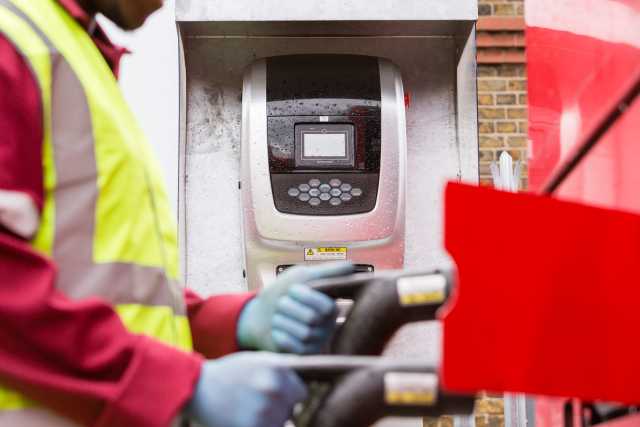
- Install scalable charging infrastructure capable of supporting current and future fleet expansion, as well as the charging infrastructure also being available for community vehicles when these fleets are electrified.
- Upskill existing workforce in high-voltage electric vehicle maintenance and operation.
- Decarbonise high-impact city routes and improve air quality across Plymouth's busiest urban corridors and the wider travel to work area.
The Challenge
Timeline Pressure
“ZEBRA funding required rapid planning. Full costings and applications had to be ready before approval, with strict deadlines for spending.”
Power Supply: The Critical Blocker
The biggest challenge wasn’t the buses; it was securing adequate power supply. Other operators discovered this reality too late. “I’ve seen other bus companies that didn’t have that foresight, they got the money, then found out they couldn’t get the power.”
Utility Company Coordination
Working with utility companies can present significant obstacles. One cautionary example: an infrastructure company ran a cable 1.5km only to discover it went under a railway bridge where excavation wasn’t permitted, requiring them to backtrack completely.
Cultural Change
Managing internal perceptions required careful handling. Plymouth Citybus took the approach of upskilling existing staff and workforce development.
The infrastructure is probably the thing that takes the most time and it's the bit most people don't see.
The Solution
Leveraging Institutional Knowledge
Horide’s key advantage came from being part of a larger group with years of London experience. When ZEBRA funding was announced, that team provided immediate guidance: “This is what you need. These are the people we talked to. This is what you need to secure your power. I know it’s tens of thousands of pounds upfront, but if you can secure your power straight away, you’re already past the first step.”
Strategic Power Coordination
The bus depot was fortunate to have a large substation nearby, though proximity doesn’t guarantee automatic access. The team secured power early, paying tens of thousands upfront to ensure the project could proceed – a decision that proved critical when other operators faced decade-long waits.
Comprehensive Infrastructure Build
“The infrastructure is probably the thing that takes the most time and it’s the bit most people don’t see.”
The solution included:
• Underground cabling with above-ground sections around the depot to balance cost with operational practicality.
• Future-proofed capacity: The team installed cable routing and trunking capable of accommodating expansion with minimal additional excavation.

Holistic Supplier Selection
The project went far beyond just vehicle procurement. The Go-Ahead team interviewed five bus suppliers from the UK, China and Scandinavia, evaluating not just buses but training provisions, longevity commitments and environmental credentials. A three-year deal provided supply security for the vendor and better pricing for Plymouth.
Workforce Adaption and Upskilling
“I’ve not employed new people; I’m upskilling my own people.” All engineers went through high-voltage training as part of the supplier agreement. Driver reception was universally positive: “Drivers always like new buses, so they were excited they were coming.”
Operational Continuity
The majority of the buses operate on high-capacity, city-based routes where electric technology excels. The routes and service are the same, making the technology work for them. However, the project also realised the opportunity to accelerate the decarbonisation of buses serving the Rame Peninsula due to the buses being garaged at Milehouse and hence able to benefit from the infrastructure.
Manufacturers received exact schedules, topography data and weather patterns, then specified which vehicles would complete full days and which might need charging. Vehicle tracking systems monitor battery state of charge in real-time.
Stakeholder Engagement
Before significant public communication, buses were already operating. Most people don’t even notice until they get on board. However, Plymouth now has an engaged and enthusiastic public, cultivated through public engagement activities, such as ‘Climate Mingles’ and depot tours, designed to facilitate knowledge sharing so that the local community and bus champions understand, and can advocate for, the benefits of the zero emission buses.
Plymouth’s fire brigade showed considerable interest: “Every watch across Plymouth has been here and gone through safety procedures with us.”
Key Benefits
Environmental Impact
- Significant emissions reduction across Plymouth's busiest urban routes
- Improved air quality, particularly in congested areas
- Zero emissions while idling in traffic
Operational Excellence
- No changes to routes, schedules, or driver duties
- Ahead of schedule delivery
- Enhanced passenger experience
- Real-time battery monitoring
Workforce Development
- Enhanced skillsets for staff
Financial Performance
- Long-term cost mitigation through three-year supplier agreements
- Scalable infrastructure
- Whole life cost viability
Scalability & Futureproofing
- Infrastructure ready for expansion as well as the charging infrastructure also being available, in the future, for community vehicles, such as school minibuses, when these fleets are electrified
- Demonstrated feasibility for other commercial operators
- Knowledge base established for future projects
Return on Investment
Value Realised
- Infrastructure investment pays for future expansion: No additional excavation needed for future expansion
- Operational savings: Lower maintenance costs due to fewer moving parts
- Extended asset life: 14-year battery warranty vs. historical three-to-five-year replacement cycles
- Staff Development: Existing workforce upskilled, strengthening expertise and eliminating the need for external recruitment
“I always say that even with diesel buses, if more people got out of their cars and went on the bus, it’d be a lot better. You can take 75 cars off the road to equal one bus’s output.”
Future Innovation
Plymouth isn’t stopping at 50 vehicles. The team is exploring:
- Raised solar panel roofs above outdoor staff parking
- Battery farm storage for capturing cheap renewable electricity overnight
- Feeding stored power back into the grid
“I’d like to say we’ll have hydrogen in the next 5 to 10 years. I think that’s an interesting technology that might replace battery in the future. Batteries are resource-intensive, hydrogen is early days, but I think it’s got potential.”
Conclusion
Plymouth Citybus’s transition demonstrates that large-scale fleet electrification is possible. “It’s just a bus on the road. Most people see a bus turn up, get on board, pay their money and they’re on their way – that’s how it should be.”
The challenges aren’t the vehicles themselves, it’s the grid infrastructure, power supply coordination and utility company processes that exist outside the operator’s direct control. With institutional knowledge, strategic planning and early stakeholder engagement, what appears insurmountable becomes achievable.
More
Projects

Free business support
Providing free support for Plymouth-based businesses to adopt more environmentally conscious processes and move towards becoming net zero.

Taking our van fleet electric
In the middle of 2022, IT support provider Acronyms replaced two of their diesel vans with electric vehicles and are now seeing the financial benefits.