


How one couple improved comfort & energy-efficiency of their listed Georgian home, respecting its historic character
Name of project
Athenaeum Street retrofit
Project by
Plymouth residents Jacki and Martin
Partners
Plymouth City Council planning and conservation officers Empower Energy Supreme Roofing
Date
30 June 2026
Status
Completed
Project
Description
Martin and Jacki’s home on Athenaeum Street is a Grade II-listed Georgian townhouse dating back to the late 1820s and attributed to architect John Foulston. The street is recognised as one of Plymouth’s finest examples of Regency design and has been Grade II listed since the mid-1950s. The house also sits within the Hoe Conservation Area, which adds another level of planning guidelines for buildings in the neighbourhood.
When they moved in two weeks after the first COVID lockdown ended, the house was in a sad state. It had been used as holiday accommodation for ten years and had lost some of its original character. Their approach combined heritage restoration with practical upgrades, including a discreet solar canopy, high-quality traditional windows and thoughtful upgrades to heating and electrics.
Having no previous experience of working with listed buildings, the couple sought advice from a Plymouth City Council’s conservation officer that helped shape a sensitive and successful retrofit. The result is a home that is more comfortable, efficient and better prepared for the future without compromising its architectural significance.
A heritage listing doesn’t mean you can’t change anything, it just means you have to do it properly.
Key objectives
- Restore and protect the home’s Georgian character
- Improve thermal comfort and reduce draughts
- Generate renewable electricity on site
- Reduce reliance on fossil fuels
- Show that upgrading a listed house in a conservation area is achievable
- Encourage others to explore similar improvements
The challenge
As a Grade II-listed building in a conservation area, any changes needed to respect the heritage aesthetic of the house and protect historic fabric. Rather than seeing this as a barrier, Jacki and Martin treated these constraints as a design guide, helping them find solutions that were practical, well-considered and appropriate for the setting.
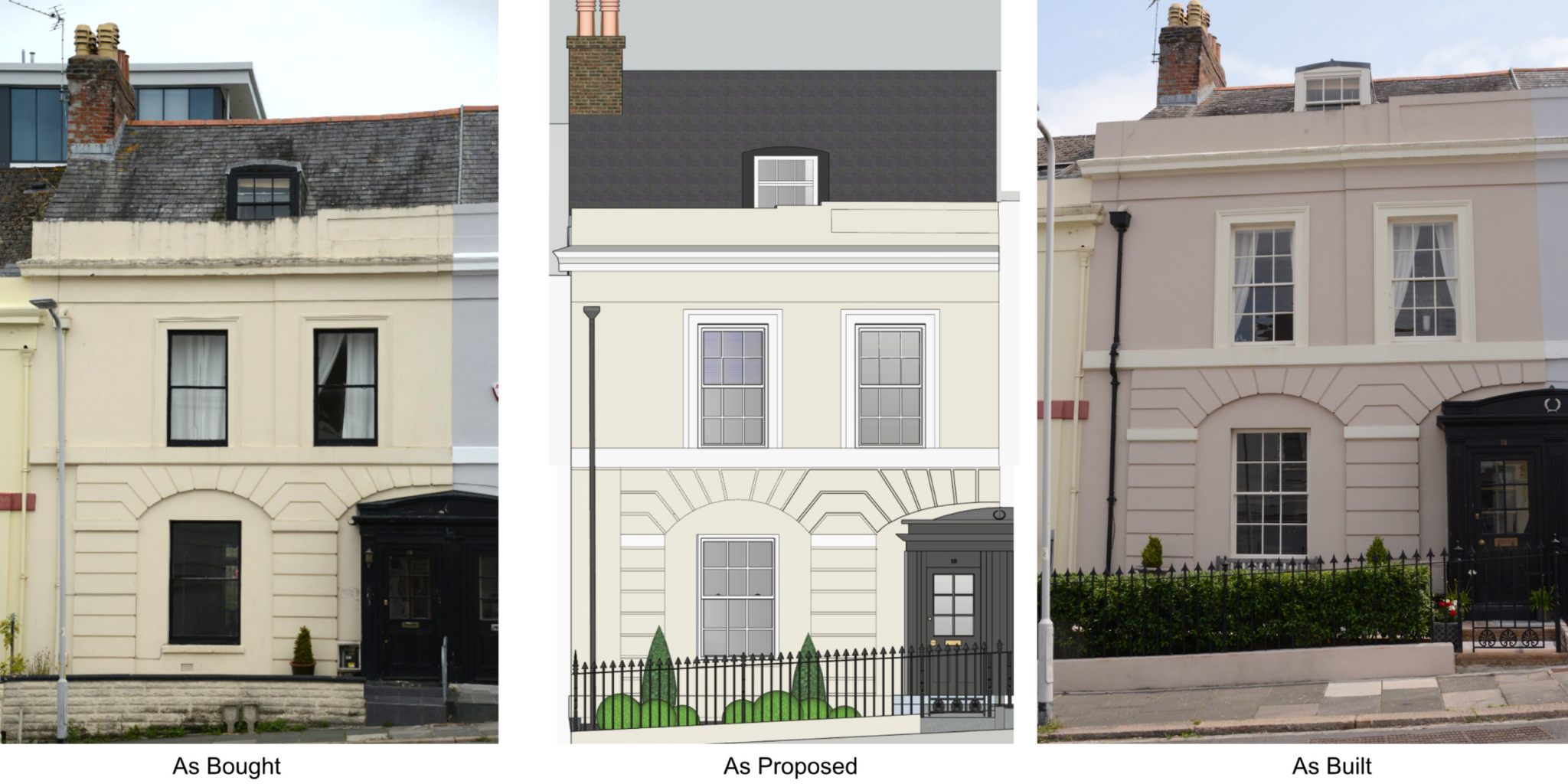
The initial planning application submitted in November 2020 covered all work planned for restoring and upgrading the house inside and out – from replacing inappropriate windows and doors to remodelling the kitchen and bathrooms, from reinstating the traditional iron railings in the front to landscaping and building a solar canopy in the back. Despite the early consultation with Plymouth, the couple were anxious about getting approval for the solar panels. The planning and conservation officers were concerned enough about the proposed changes that they paid a site visit before making their decision about the application. Fortunately for Jacki and Martin, the city officers determined that the proposed plans would help preserve the property. The application was approved – solar panels and all.
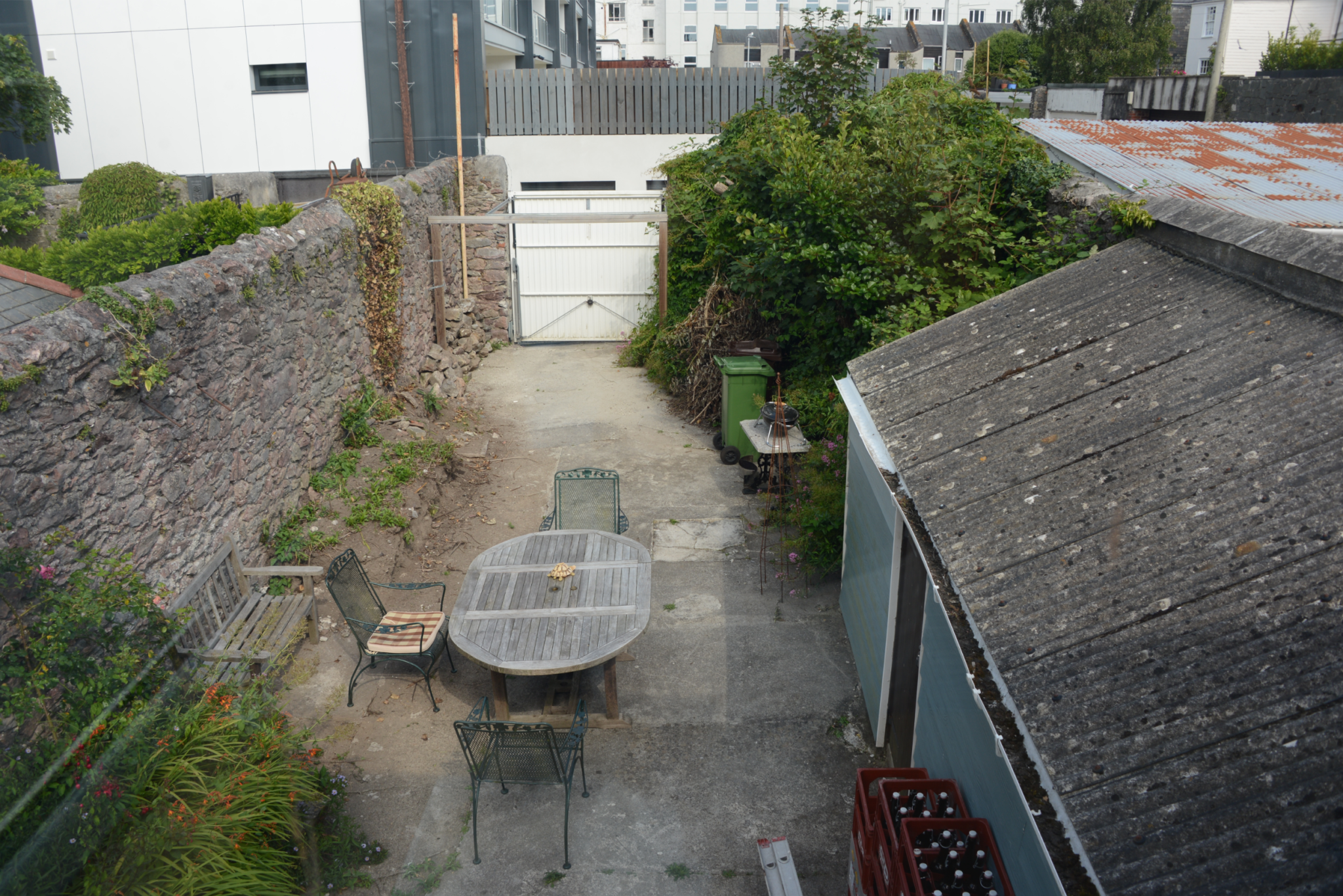
Work began early in 2021 with the restoration of plasterwork and fireplaces and replacement of windows. Landscaping the rear garden and building a toilet extension and a shed that would house the battery and cabling for the solar panels came next, but the earthworks for this uncovered a serious problem with the house’s foundation. This required a complete rebuild of the rear wall – and another planning application. Interior projects like the bathrooms and kitchen continued through 2022.
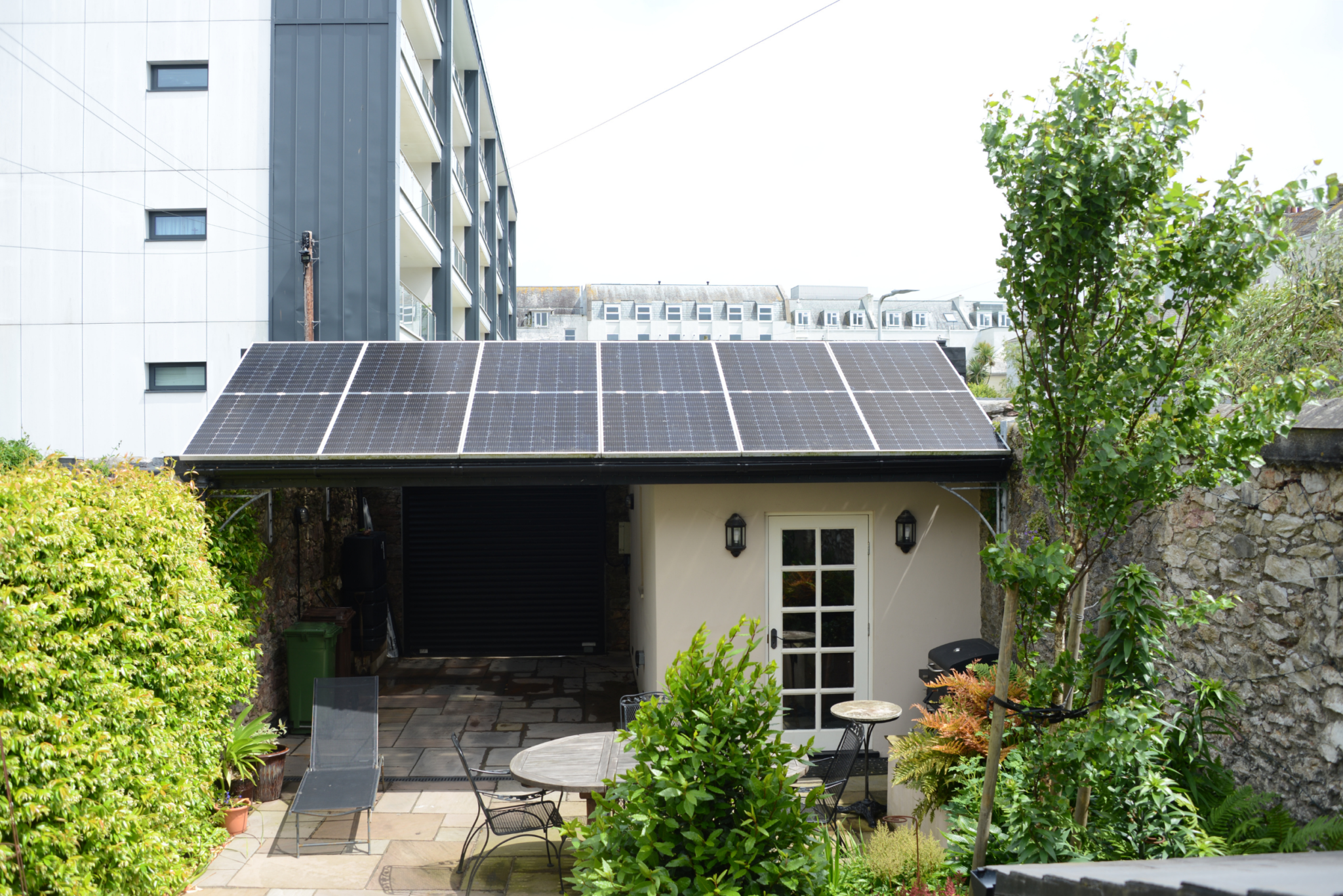
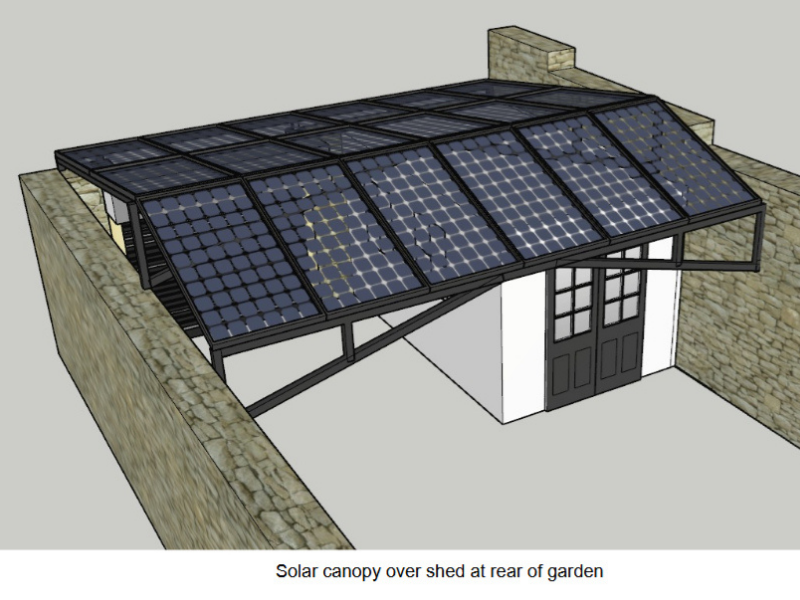
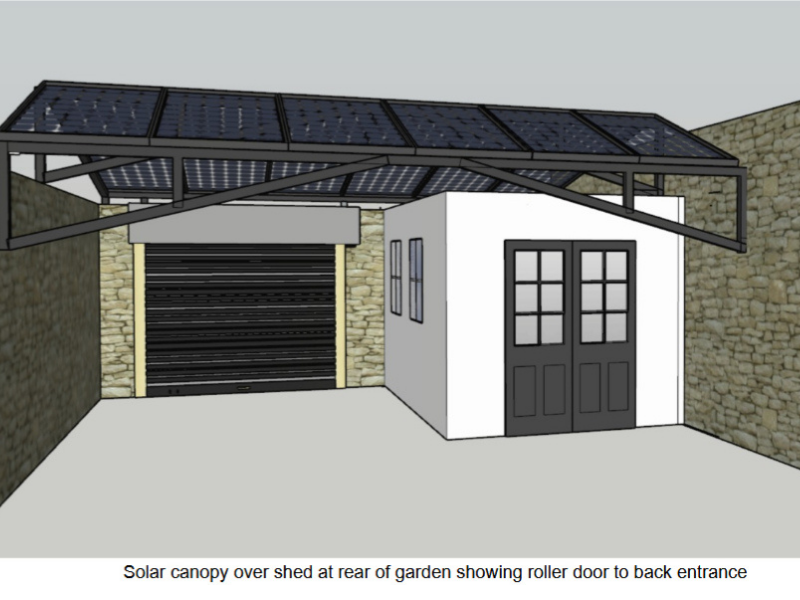
The solar project finally began in early 2023, starting with detailed plans for how the structure and the panels would fit together. The solar panels Martin selected were bi-facial – they used light from both sides to generate electricity – which meant that they aren’t mounted on the roof, they are the roof. The canopy structure had to fit exactly to each panel, but despite the precision required, it was completed by a local company – Supreme Roofing – in just two days in July 2023. The solar panels and battery were installed by Empower Energy in September 2023.
Martin and Jacki were the first residents in the Hoe Conservation Area to have solar panels approved.
We moved into a Georgian house that had lost a lot of its features. A lot of our work was putting back what should have been there.
The solution
Working with heritage, not against it
Martin and Jacki sought early advice from conservation and heritage officers, clarifying that the building was listed inside and out, what features were historically important and what types of changes were likely to be acceptable. Using this guidance, they developed a single, joined-up proposal covering restoration works, upgrades and garden improvements. They found that a flexible approach reflects the reality of retrofitting older buildings, which often requires a mix of solutions to get the best results.
The solar canopy
A solar canopy was installed at the rear of the property and not visible from the historic streetscape. It generates renewable electricity while remaining visually discreet and in keeping with the conservation area requirements. It is proof that modern renewable systems can be integrated sensitively into a historic setting.
Upgrading windows
Over time, many of the home’s original panelled windows had been replaced with post-war single-panel sashes or modern uPVC. High-quality, single-glazed sash windows were installed that closely replicate the original Georgian windows. The new tight-fitting windows have significantly reduced draughts, heat loss and noise. A thermal imaging survey showed the replacement windows perform very well indeed.
Thoughtful energy upgrades
The home combines solar generation with 13.5kWh battery storage, thermostatic controls for the gas boiler and the use of electric radiators in some rooms. The revamped kitchen replaced gas appliances with electric and added an electric boiling tap. Energy-balancing software optimises when solar power is used directly, stored in the battery or exported to the grid.
The couple take advantage of cheaper overnight electricity rates to run household appliances and charge their plug-in hybrid vehicle. The car charges well enough using a standard 13amp socket without the need for a fast charger.
Repairing and reinstating historic features
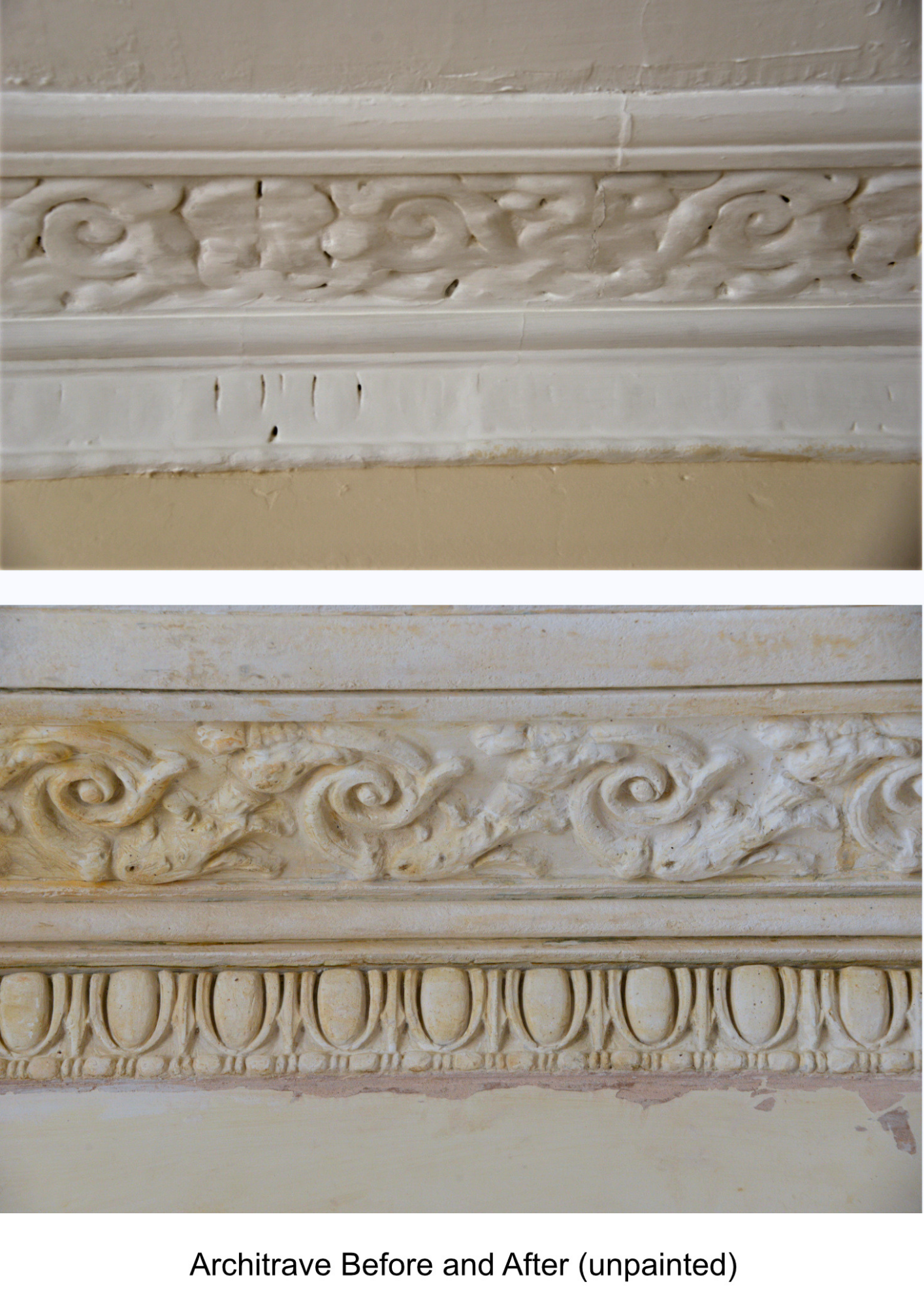
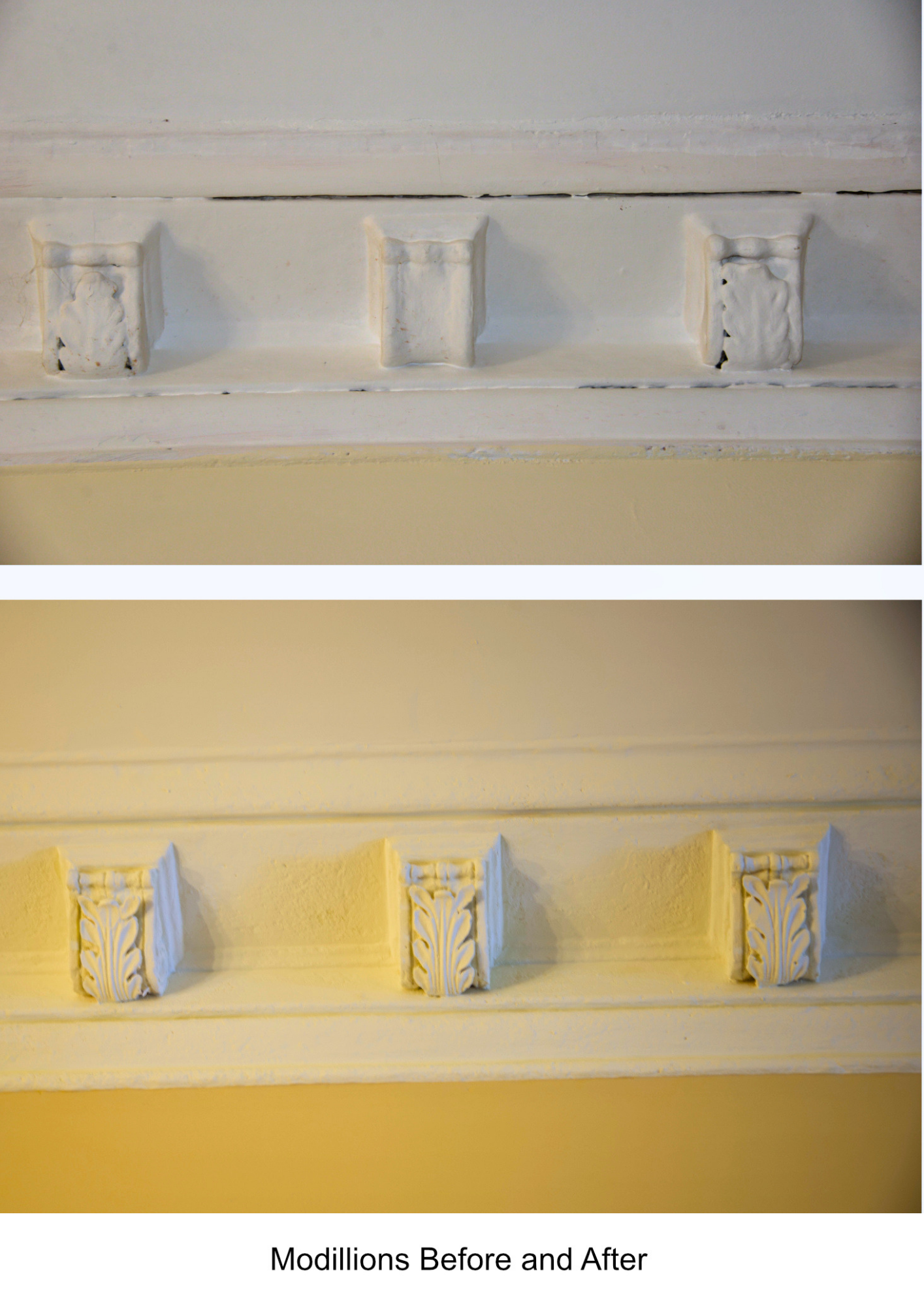
Alongside energy upgrades, Jacki and Martin restored their home’s ornate plasterwork, shutters, doors and railings using materials and colour palettes appropriate to the Georgian period. Some original features had accumulated 200 years of paint that had to be carefully stripped away. The project provided the opportunity to strengthen the building’s original character while supporting its long-term future.
We’re concerned about the world we’re leaving to our grandchildren. We want to do our part in making a difference.
Technical details
- Solar array: 18 x LG LG440N2T-E6 bifacial clear panels, covering a 6m x 6m canopy
- Inverter: SolarEdge SE-5000-APP
- Battery: Tesla battery (13.5kWh capacity)
- Isolator switch for maintenance and safety
Key benefits
- Renewable electricity generated on site
- Reduced day to day energy use
- Significantly lower energy bills
- Improved comfort, a quieter environment and reduced draughts
- Historic features restored or reinstated
- A Georgian home that is future-ready
- A visible local example showing upgrading a listed building is possible
Outcome
From September 2023 to the end of May 2026, the system generated over 18 mWh of electricity and saved an estimated 3,410 kg of CO₂ emissions. Natural gas use has been reduced by about 16% over the period.
Jacki and Martin describe themselves as environmentally motivated, keen to improve their home, reduce their carbon footprint and demonstrate what’s possible in older properties. The solar installation now supplies a significant proportion of the home’s electricity and supports low-carbon travel through electric vehicle charging.
Virtually all our local car journeys are now powered by the sun!
A greener, heritage city
Plymouth has over 750 listed buildings and many in conservation areas. Jacki and Martin’s adaptations show that these buildings don’t have to be left behind as the city works towards a cleaner future. Local organisations such as Plymouth Energy Community and Plymouth Practical Retrofit Exchange are showing that such projects can be achieved with the right support and advice and pave the way for others.
By blending concern for heritage with climate action, Jacki and Martin’s home offers a practical and hopeful example to others of how Plymouth’s past and future can work together.
More
Projects

Free business support
Providing free support for Plymouth-based businesses to adopt more environmentally conscious processes and move towards becoming net zero.

Taking our van fleet electric
In the middle of 2022, IT support provider Acronyms replaced two of their diesel vans with electric vehicles and are now seeing the financial benefits.