


Cut our emissions from construction and buildings
In Short
To cut our emissions from construction and buildings, we need to:
- Avoid unnecessary construction and demolition by prioritising re-use and retrofit of existing buildings
- Retrofit our homes and workplaces to maximise energy efficiency and switch to renewable energy heating, cooling and power sources
- Construct all new buildings using low carbon building materials and construction methods
- Construct all new buildings to be ‘net zero’ operationally as soon as possible, with renewable energy heating and power sources
- Use green infrastructure principles to capture carbon in buildings, landscaping and public realm
The Full
Story
Our buildings account for about 26% of Plymouth’s carbon footprint, a figure that has barely changed in the last ten years. The carbon emissions come from the way we heat our homes and workplaces and make hot water—typically from burning gas, a fossil fuel, in our boilers. Our buildings are also quite leaky—heat (and money) literally escapes through poorly insulated walls, floors, roofs and windows. That means we burn even more gas to make up for it, pushing bills up too.
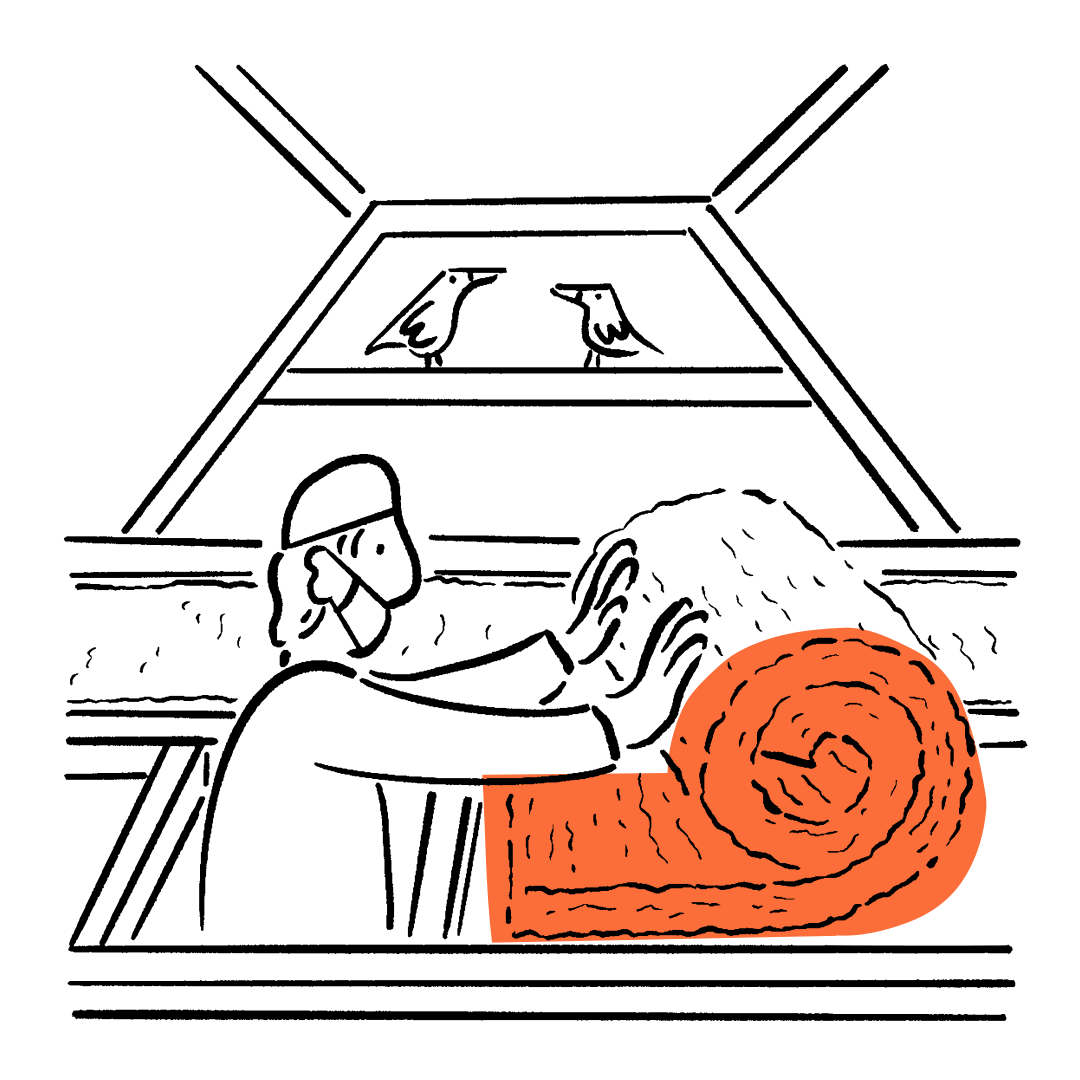
10,000 of Plymouth’s 120,000 homes have no loft insulation at all
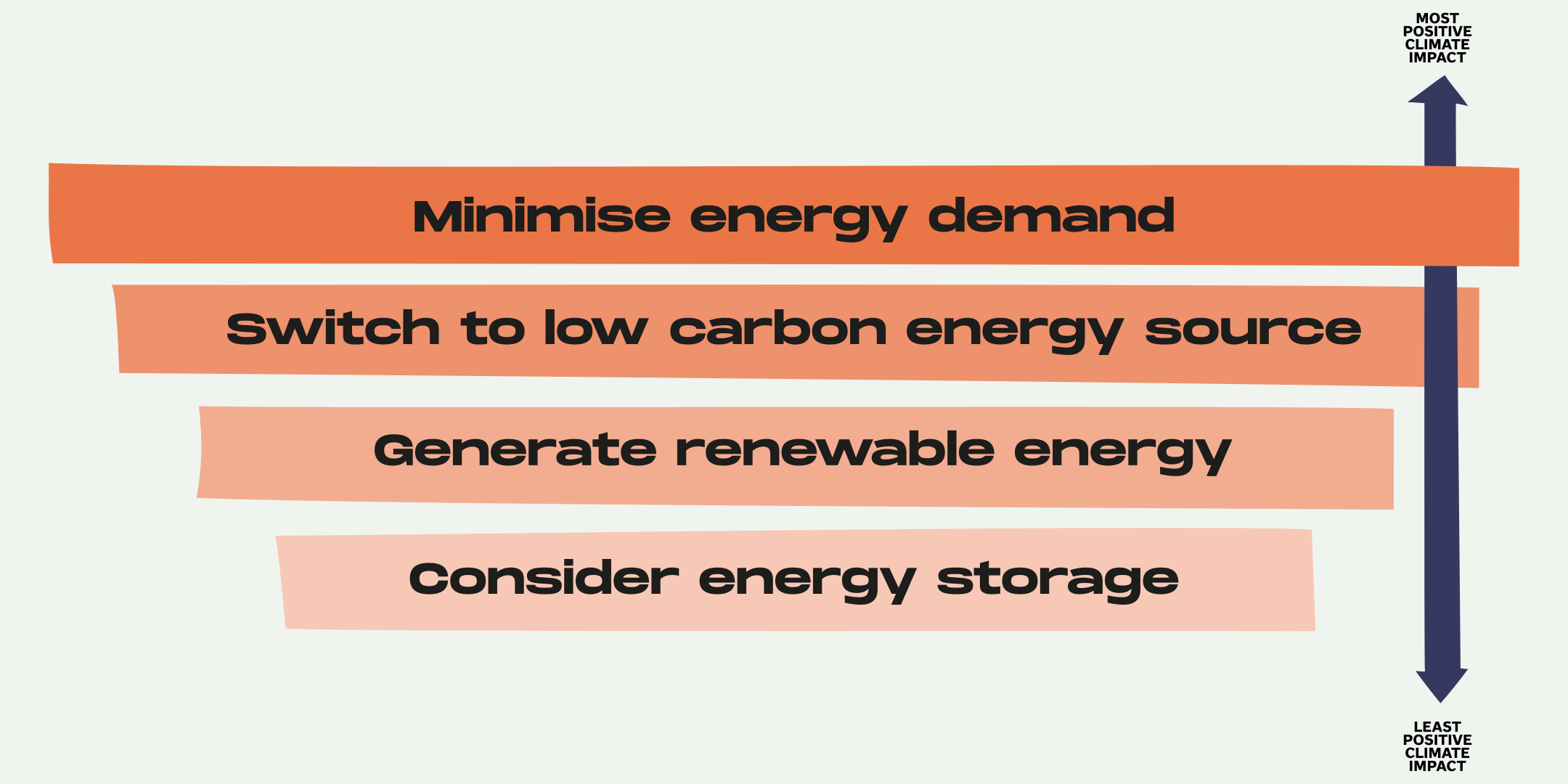
To get to net zero, we need to improve our existing homes and workplaces, making them as energy efficient as possible, bringing our energy bills down. Secondly, we must move away from natural gas for our heating and hot water to low carbon energy. In practice, this often means replacing gas boilers with electric heat pumps or connecting to a heat network. We can also generate our own energy from solar PV panels. This whole process is called retrofit. The retrofit triangle shows which activities will have the biggest climate impact.
The Retrofit Triangle
Did you know your loft insulation should be 270mm thick?

We’re also building new homes and premises in the city. While much of the carbon emissions take place outside of Plymouth (largely from the mining and manufacture of materials) we know that the construction process accounts for about 11% of global carbon emissions.
In fact, roughly half the carbon emissions of a building are baked into the fabric of the building,* before anyone has set foot through the door! By reusing and refurbishing or repurposing existing buildings instead of demolishing and building new, we will lower our carbon emissions from construction. We must also use low carbon construction methods and materials, while maximising energy efficiency of the building to ultimately ensure future development is zero carbon.
Source
*Embodied carbon of buildings, UK Green Building Council Read more about it here.
Take action now
See ActionsINDIVIDUALS
Our actions matter. We have 121,395 homes in Plymouth. If each one of us takes action in our homes, we could cut Plymouth's carbon footprint by over 20%. Will you take action to reduce your home’s carbon footprint?
Key Steps
- Get an independent assessment of the energy rating of your home to help identify cost-efficient measures to reduce carbon emissions and energy bills (Plymouth Energy Community provides independent, impartial advice)
- Improve energy efficiency of your home through:
- Improved loft, floor and wall insulation, air tightness, A rated windows, LED lights and other fabric improvements
- Smarter building controls and heating systems
- Better draught proofing
- Reduce energy demand from:
- Turning your thermostat down
- Removal / replacement of inefficient appliances
- More efficient use of your appliances
- Ask landlords to comply with minimum energy efficiency standards if needed
- Replace oil / gas heating systems with low carbon alternative (for example: heat pumps or connection to a heat network)
- Make the most of opportunities for solar PV in existing and new buildings, including battery storage and solar thermal water heating technologies
- Minimise the amount of hard surfacing on the spaces around your home, using permeable materials where possible and retaining and enhancing trees, plants and soil that store carbon and are good for wildlife
ORGANISATIONS
Organisations have significant influence over the city’s emissions from the built environment. From buildings owned, rented or run or if you’re working in construction, Plymouth’s organisations (large and small) have the power to make the difference.
Key Steps for All
- Improve energy efficiency of all offices, workspaces and community buildings through:
- Improved loft, floor and wall insulation, air tightness and other fabric improvements
- Smarter building controls and heating systems
- Removal / replacement of inefficient appliances
- Ask landlords to comply with minimum energy efficiency standards coming into force in 2030 (minimum EPC rating ‘B’)
- Replace oil / gas heating systems with low carbon alternative (heat pumps or connection to a heat network)
- Make the most of opportunities for solar PV in existing and new buildings, including consideration of battery storage and solar thermal water heating technologies
- Share your buildings, energy efficiency and retrofit journey with others
- Make retrofit rather than ‘demolish and rebuild’ a first option for expansion or new premises
- Ensure new building work is conducted to a net zero operational standard
- Aspire to net zero development on land owned
Key Steps for Developer / Construction Industry
- Integrate carbon reduction targets, outcomes and whole life cycle assessments into the development process at project commissioning stage
- Orientate all new homes and other developments with passive solar design in mind to make best use of aspect and topography but also design to avoid overheating
- Use resilient, low carbon, locally sourced materials in construction, including recycled construction waste, reducing carbon miles
- Design for the highest energy efficiency standards and air tightness to minimise energy demand
- Specify low carbon heating and cooling systems and renewable energy supply in new homes and buildings
- Explore the potential benefits of modular construction to deliver more efficient building processes with sustainable materials
- Minimise use of hard surfacing and retain / increase areas of green space, planting and solutions. For example: green roofs or walls
- Deliver biodiversity net gain on development sites
- Deliver sustainable drainage solutions
- Offsetting of residual emissions from building and construction in local offsetting schemes
Service Providers
Policy makers and service providers influence how the city can meet net zero through construction and retrofit from planning policy to building skills, capacity and sharing best practice.
Key Steps for Service Providers
- Explore policy tools that give prioritisation to the reuse of existing buildings and brownfield sites
- Raise awareness and provide evidence-based information to bust myths that viable retrofits and net zero are not economically possible
- Increase skills and capacity to deliver net zero construction
- Consider policy and financial mechanisms to incentivise retrofit and net zero development
- Raise awareness of the wider benefits of net zero development and the changing face of building design that will result
- Undertake a bottom-up assessment of opportunities for insulation in existing dwellings by tenure, and seek to make use of existing Energy Company Obligation funding and seeking more ambitious national insulation programmes
- Ensure that poorer communities are not left behind in relation to the funding of and support for energy efficiency/retrofit measures
- Optimise tree cover and greening of public spaces
What progress has been made?
See progressWhat progress are we making?
We emitted 258,372 tonnes of CO2e from our buildings in 2022, down by 21,670 in 2021. However, since 2008, we’ve made little progress. This means that every year from now on, we need to cut our carbon emissions even more drastically if we stand a chance of getting to net zero.
Plymouth’s Progress to Net Zero


Plymouth Emissions Report 2025
See the report hereHow Will We Measure Our Progress?
We can also measure our progress in other ways that show how well we’re doing at making our buildings more energy efficient and heating them from low carbon sources.
Improved EPC’s
Number of non-domestic buildings with Band D, E, F & G improved to Bands B & C
Cavity Wall Insulation
Number of homes with domestic cavity wall insulation installs
Solid Wall Insulation
Number of homes with domestic solid wall insulation installs
Loft Insulation
Number of homes with domestic loft insulation
Low Carbon Heating
Number of non-domestic buildings with low carbon heating
Heat Pumps
Number of buildings with domestic low carbon heat—heat pumps in homes
See what’s happening across the city
Projects